Introduction
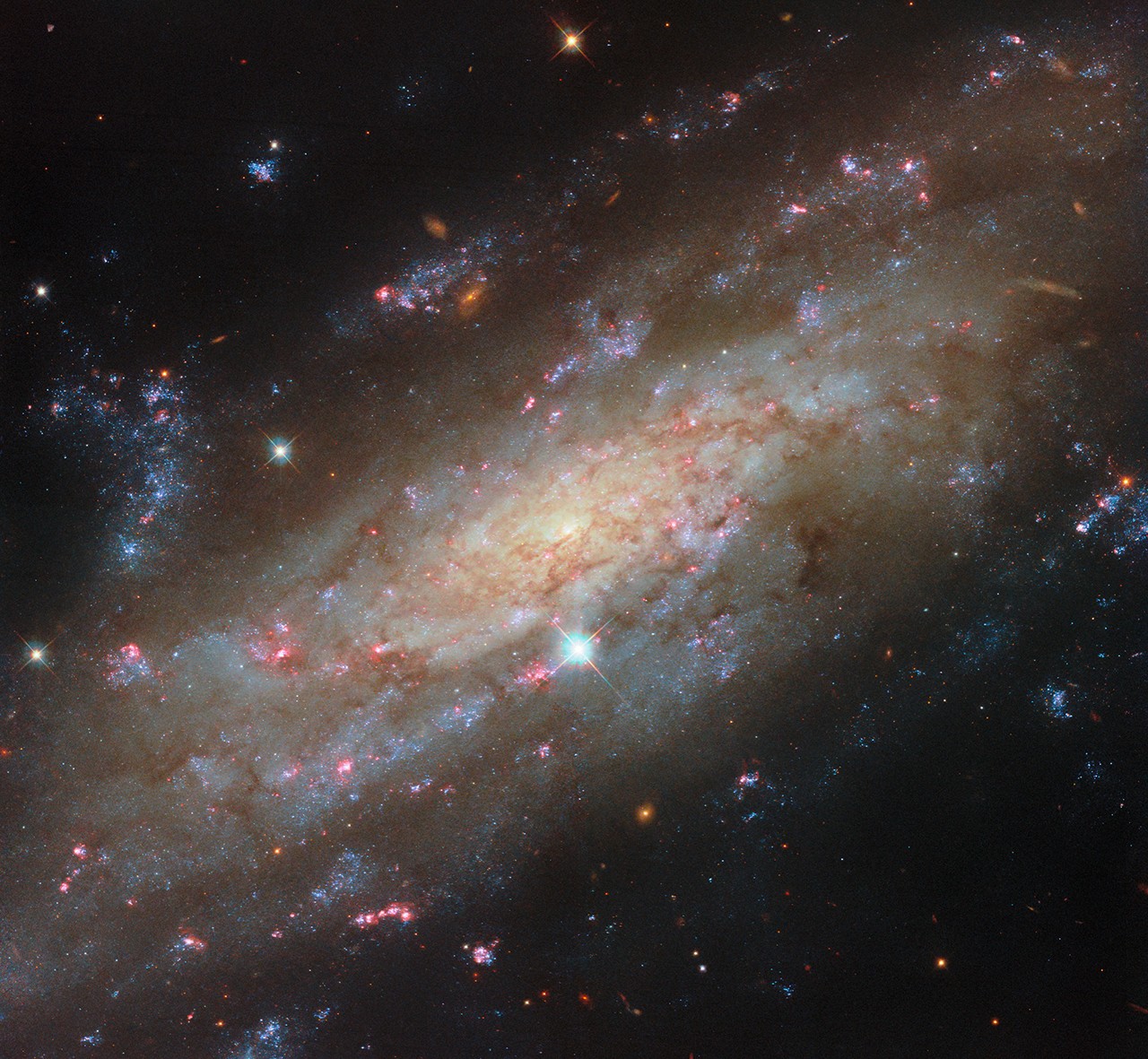
NASA's Hubble Space Telescope has captured a breathtaking new view of the spiral galaxy NGC 3137, located 53 million light-years away in the constellation Antlia (the Air Pump). This image, part of the PHANGS-HST survey, not only showcases the galaxy's glittering star clusters and intricate spiral structure but also offers astronomers a unique laboratory to study the life cycle of stars and the dynamics of galaxy groups. The galaxy's proximity makes it an ideal target for understanding how galaxies evolve and interact.
The Galaxy and Its Group
NGC 3137 is not an isolated cosmic island; it travels through space as part of the NGC 3175 group, a galactic assembly that astronomers believe closely resembles our own Local Group. Just as the Milky Way and Andromeda dominate the Local Group, NGC 3137 and its companion NGC 3175 (also imaged by Hubble) are the two largest spirals in this collection. Both groups also contain numerous smaller dwarf galaxies. Researchers have identified more than 500 dwarf galaxy candidates within the NGC 3175 group, though the exact count remains unknown. By studying this nearby system, scientists gain valuable insights into the formation, evolution, and dynamics of the galactic home we call the Milky Way.
A Detailed View from Hubble
The image of NGC 3137 is a masterpiece of multi-color imaging. Hubble's observations were made using six different color filters, each highlighting a distinct aspect of the galaxy's composition. The result reveals a highly inclined spiral, tilted significantly from our line of sight, which provides a dramatic perspective on its loose, feathery spiral arms. A network of fine, dusty clouds threads through the galaxy's disk, tracing regions where new stars are born and old stars shed their material back into the interstellar medium. This detailed view is a testament to Hubble's enduring capability to resolve fine structures even across tens of millions of light-years.
The Supermassive Black Hole
At the heart of NGC 3137 lies a supermassive black hole with a mass estimated at 60 million times that of our Sun. Encircled by a dense core of stars and gas, this gravitational behemoth influences the motion of material in the galaxy's central region. The black hole's presence is inferred from the motions of stars and gas clouds, which orbit at high speeds, revealing the immense mass hidden within the galaxy's bright core. Understanding such black holes helps astronomers connect galaxy evolution with the growth of these central monsters.
Studying Galactic Evolution
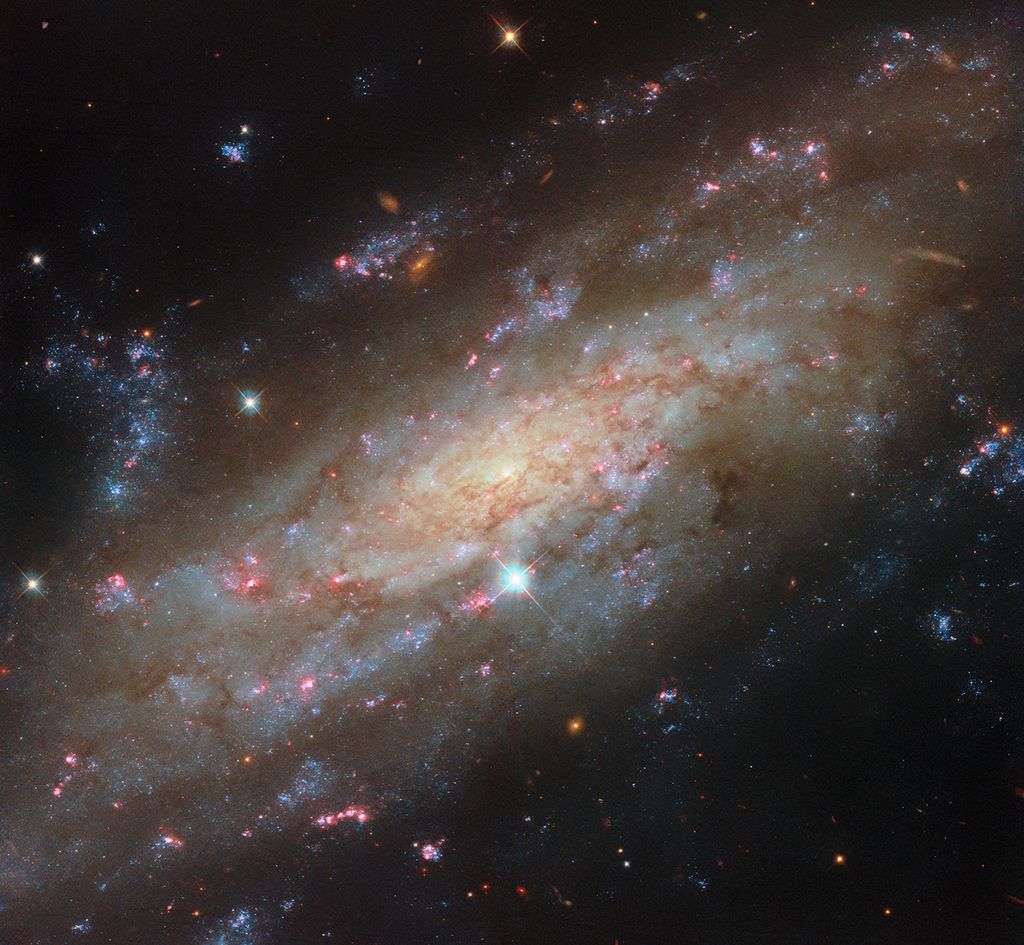
NGC 3137 serves as a cosmic laboratory for studying the cycle of stellar birth and death. The galaxy's proximity and favorable orientation allow astronomers to map star-forming regions and compare them with similar processes in our own galaxy. The PHANGS-HST survey, which produced this image, aims to understand how star formation proceeds across different environments—from the dense arms of spiral galaxies to their more quiescent outer regions. By examining galaxies like NGC 3137, researchers can test theories of galactic evolution and refine models of how galaxies like the Milky Way formed and changed over billions of years.
Conclusion
This Hubble image of NGC 3137 is more than a beautiful portrait; it is a scientific treasure trove. The galaxy's striking spiral arms, its membership in a group akin to our own, and its massive central black hole all contribute to a deeper understanding of the universe. As Hubble continues to observe such targets, it not only satisfies our curiosity about the cosmos but also provides essential data for future missions like the James Webb Space Telescope. The starry spiral of NGC 3137 reminds us of the intricate beauty and complexity that lie beyond our own galaxy.