President Donald Trump's recent threat to impose a 25% tariff on cars and trucks imported from the European Union has sent shockwaves through global markets. This move, announced via social media, comes amid a complex trade dispute that hinges on a previously agreed deal, legal challenges, and economic pressures. Here are seven essential things you need to understand about this development.
1. Trump's Blunt Announcement and Accusation
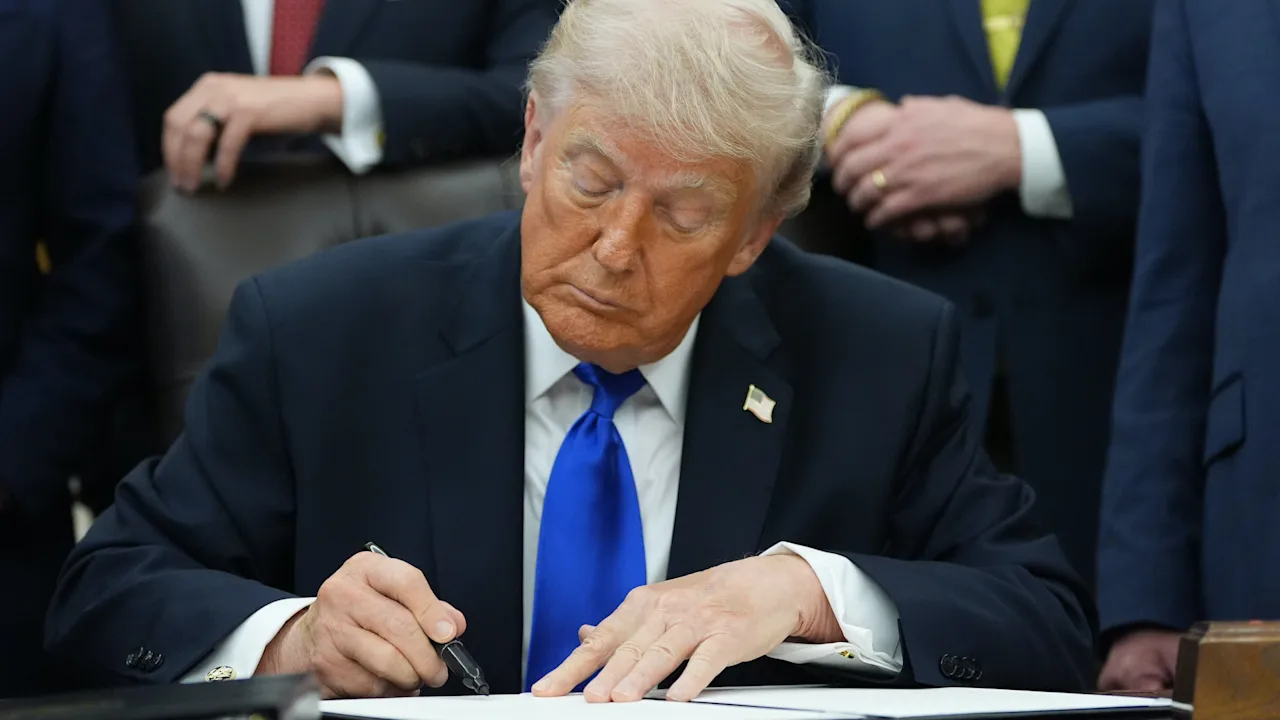
On a Friday, President Trump took to social media to declare that he would escalate tariffs on European Union vehicles to 25% starting next week. He claimed that the EU was “not complying with our fully agreed to Trade Deal,” though he offered no specific details about what violations he perceived. This abrupt warning caught many off guard, especially given the delicate state of global trade relations. The announcement itself was brief, lacking the nuance often seen in formal trade negotiations, and immediately raised concerns about a potential escalation in transatlantic economic tensions.
2. The Turnberry Agreement: A Fragile Foundation
Last July, Trump and European Commission President Ursula von der Leyen shook hands on a trade framework known as the Turnberry Agreement, named after Trump's Scottish golf course. This deal set a tariff ceiling of 15% on most goods, aiming to stabilize trade flows and reduce friction. However, the agreement has been under strain. The European Commission reiterated in February that “a deal is a deal,” signaling their expectation that both sides would honor the terms. Despite this, the Trump administration has taken actions that threaten the pact, and the Supreme Court's recent ruling has further complicated matters.
3. Legal Challenges Undermine Trade Authority
A major twist came when the Supreme Court ruled earlier this year that the president lacked the legal authority to declare an economic emergency and impose tariffs on EU goods as he had done previously. This decision effectively dismantled the legal basis for the tariff ceiling agreed in the Turnberry Agreement. In response, the Trump administration began exploring substitute authorities and imposed a temporary 10% tax while conducting investigations into trade imbalances and national security issues. The goal is to find new legal justifications to recoup lost tariff revenue, but this process risks violating the bilateral deal altogether.
4. Economic Strain From the Iran War
The tariff threat hits at a moment when the global economy is already reeling from the Iran war, which began with U.S. and Israeli strikes in late February. The conflict has effectively closed the strategic Strait of Hormuz, sending oil and natural gas prices skyrocketing. This has crushed expectations for economic growth, fueling higher inflation worldwide. For the U.S., which is both a major energy producer and consumer, the ripple effects are complex: higher energy costs boost domestic production but also raise consumer prices, squeezing households and businesses alike.
5. Political Pressure at Home Ahead of Midterms
President Trump faces significant political headwinds as the November midterm elections approach. Inflation, a key issue, has been stubbornly high. Annual inflation in March reached 3.3%, higher than the rate he inherited upon returning to the White House last year. Trump had campaigned on a promise to quickly tame prices that surged after the pandemic-era government response, but rising energy costs have undercut that pledge. Only 30% of U.S. adults approved of Trump’s handling of the economy, according to a recent Associated Press-NORC poll. This economic discontent could energize opposition voters and challenge Republican control of Congress.
6. Impact on European Automakers
European automakers stand to lose massively if the 25% tariff goes into effect. The EU had previously estimated that the Turnberry Agreement would save its car manufacturers between 500 million and 600 million euros (roughly $585 million to $700 million) each month. With the new tariff, those savings vanish, replaced by a steep levy that could make European vehicles significantly less competitive in the U.S. market. This is particularly damaging for luxury brands and high-volume exporters. The EU has already indicated it expects the deal to be honored, but the tariff threat could force European leaders to retaliate, sparking a broader trade war.
7. The Stakes of Transatlantic Trade
The value of EU-U.S. trade in goods and services reached a staggering 1.7 trillion euros ($2 trillion) in 2024, according to Eurostat. That translates to an average of 4.6 billion euros crossing the Atlantic every single day. Any disruption to this flow would have profound consequences for both economies, affecting everything from manufacturing supply chains to consumer prices. Despite the tensions, European Trade Commissioner Maroš Šefčovič noted recently that the relationship with the U.S. had become “more positive” over the past year. However, the new tariff threat could reverse that trend, pushing both sides into a high-stakes confrontation with no easy resolution.
Conclusion: The proposed 25% tariff on EU automobiles is more than a trade spat; it is a test of international agreements, legal frameworks, and political will. With the Turnberry Agreement hanging in the balance, a Supreme Court ruling altering the legal landscape, and global economic pressures mounting, the coming weeks will be critical. Whether the tariff is actually imposed or serves as a negotiating tactic, the implications for automakers, consumers, and transatlantic relations are immense. As the world watches, the outcome will shape trade policy for years to come.