Did you know that you can help scientists uncover the secrets of the universe from the comfort of your own home? The European Space Agency's Euclid Space Telescope is on a mission to map the dark universe, and it needs your eyes to spot galaxies that are bending spacetime. This citizen science project invites volunteers to scan never-before-seen images for gravitational lensing—a phenomenon where massive galaxies warp the fabric of spacetime, acting like cosmic magnifying glasses. In this listicle, we dive into 10 things you need to know about this exciting opportunity to contribute to cutting-edge cosmology research.
1. What is the Euclid Space Telescope?
The Euclid Space Telescope, launched by the European Space Agency in 2024, is a pioneering observatory designed to explore the dark universe. Its primary goal is to investigate dark energy and dark matter, which together make up about 95% of the cosmos. Euclid orbits the Sun at the second Lagrange point (L2), 1.5 million kilometers from Earth, providing a stable environment for ultra-precise observations. The telescope captures high-resolution images across visible and infrared wavelengths, generating an unprecedented amount of data that will map billions of galaxies over six years. But Euclid's data is so vast that scientists need public help to identify rare and subtle features—like gravitational lenses—that algorithms often miss.
2. What Are Spacetime Warps?
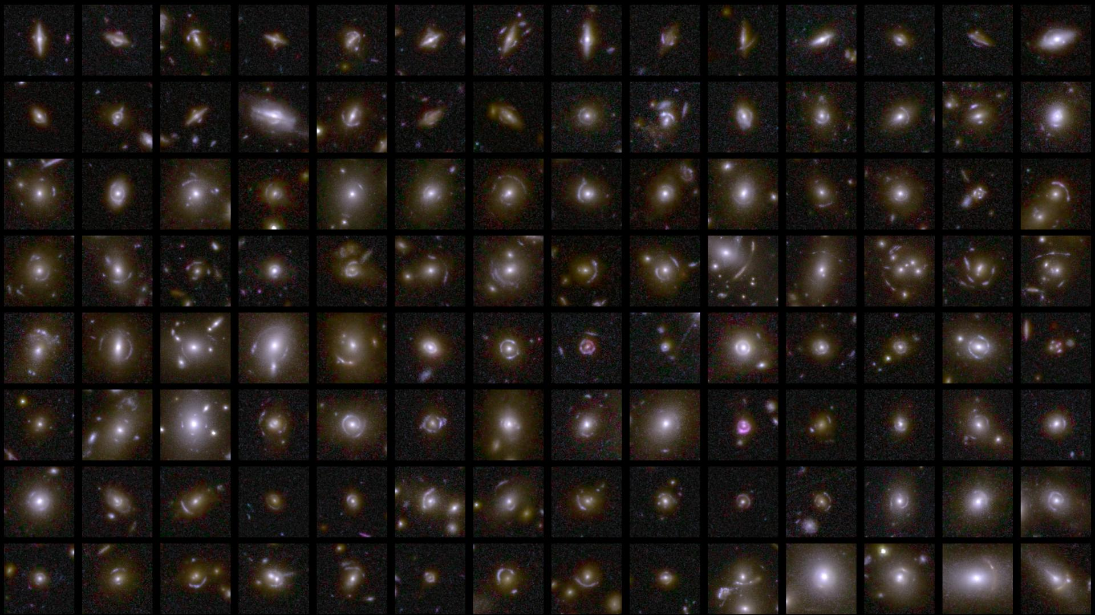
Spacetime warps, also known as gravitational lensing, occur when a massive object—like a galaxy or cluster of galaxies—bends the light from a more distant object behind it. This effect was first predicted by Einstein's theory of general relativity. The warp creates distorted, magnified, or even multiple images of the background galaxy. Strong gravitational lensing is rare and produces dramatic arcs and rings, while weak lensing causes subtle shape distortions. By studying these warps, scientists can map the distribution of dark matter, understand the expansion of the universe, and test fundamental physics. In Euclid's images, volunteers look for telltale signs of this cosmic bending.
3. Why Does Euclid Need Citizen Scientists?
Euclid will produce over 40,000 images during its mission, covering a large area of the sky. While machine learning algorithms can detect obvious lenses, they often fail with faint or unusual examples. The human brain, trained to recognize patterns, excels at spotting subtle arcs and rings that computers overlook. This citizen science project, hosted on the Zooniverse platform, allows anyone with an internet connection to classify images. Each classification helps train algorithms and directly contributes to scientific papers. Previous projects like Galaxy Zoo have proven that volunteers can make real discoveries—sometimes even finding new types of objects. Here, your clicks can reveal gravitational lenses that might unlock secrets of dark matter.
4. How Do You Participate?
Getting involved is simple. Visit the Euclid citizen science website (part of the Zooniverse project called 'Euclid: Dark Universe Detective') and create a free account. You'll be guided through a brief tutorial that teaches you how to spot gravitational lenses. Then, you'll be presented with real Euclid images. Your task: draw circles or mark areas where you see arcs, rings, or distorted galaxies. You can also classify whether a lens is strong or weak. The interface is intuitive, and a community forum offers support and discussion. As you classify, your contributions are recorded, and you earn badges for milestones. It's like a game, but every action advances real astronomy research.
5. What Types of Lenses Will You See?
The Euclid images reveal several types of gravitational lenses. Strong lenses show obvious arcs or multiple images of background galaxies, often forming a ring known as an Einstein ring. Weak lenses require statistical analysis because the distortions are tiny. You'll also encounter galaxy clusters that produce giant arcs. Some images may contain false positives—like spiral arms or dust lanes that mimic lensing—but the project trains you to distinguish them. Each lens is unique. By cataloging these phenomena, scientists can build a comprehensive sample to probe the distribution of dark matter on different scales. Your careful eye might even spot a previously unknown lens that becomes the subject of a follow-up study.
6. What Can You Learn About Dark Matter?
Dark matter doesn't emit or absorb light, so it's invisible. However, it does exert gravitational pull, affecting how light bends around galaxies. By mapping the distortions caused by dark matter—via gravitational lensing—scientists can create maps of its distribution. Euclid's wide survey will produce detailed dark matter maps across billions of light-years. Citizen scientists play a key role by identifying the lensing systems that provide the raw data for these maps. The more lenses you find, the better the maps become. This helps answer fundamental questions: Is dark matter clumpy or smooth? Does it interact with itself? How does it influence galaxy formation? Your classifications feed directly into these analyses.
7. Will You Discover Something New?
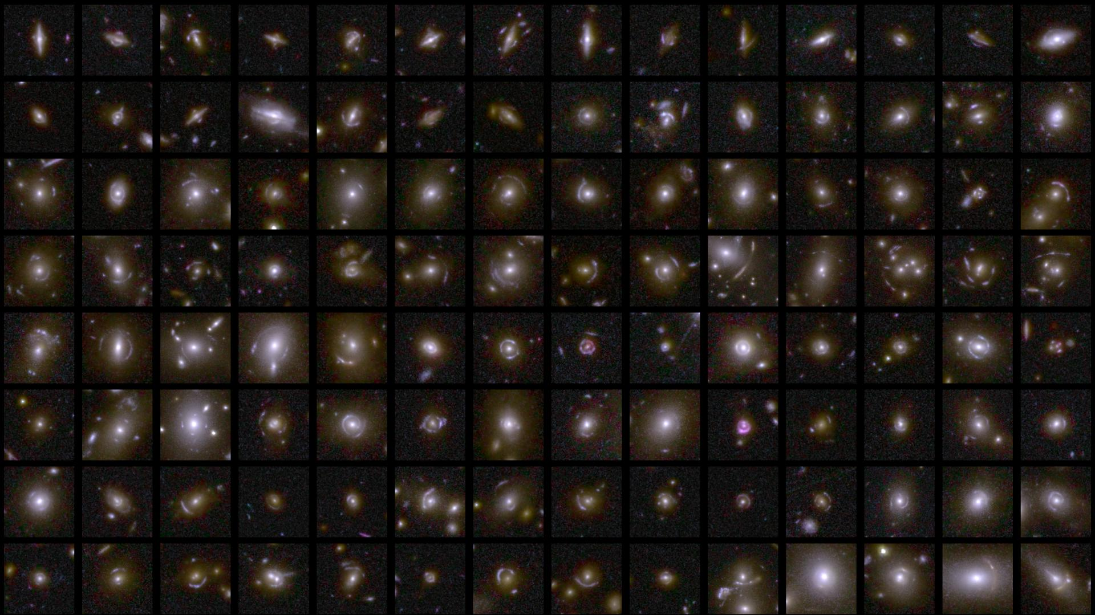
Absolutely! Citizen scientists have a history of making unexpected discoveries. In similar Zooniverse projects, volunteers have found new types of galaxies, unusual quasars, and even a rare Einstein cross (four images of the same object). With Euclid's deep and wide coverage, the chance of stumbling upon something strange is high. The project has a built-in 'talk' feature where you can flag unusual objects. Scientists regularly review these flags, leading to follow-up observations with telescopes like Hubble or JWST. If you find a new lens or an exotic phenomenon, you could be credited as a co-author on scientific papers. It's a rare opportunity for non-scientists to contribute directly to breakthrough research.
8. Mission Timelines and Data Flow
Euclid launched in July 2024 and began science operations later that year. The citizen science project launched alongside the first public data release, which includes images from the telescope's initial survey phase. As new data arrives in batches, new image sets are added to the platform. The mission is planned to run until 2029, with possible extensions. Over time, you can monitor your contributions and see how they are used in real scientific publications. The Zooniverse platform also provides metrics on how many volunteers are online, total classifications, and the number of lenses discovered. This creates a dynamic community where you can track the collective progress of the project.
9. Technical Tips for Better Classification
To be an effective lens hunter, follow these tips: Use a high-resolution screen and zoom in on suspicious areas. Look for tangential arcs—curves that point away from the center of a large galaxy or cluster. Be aware of optical illusions: diffraction spikes or satellite trails can mimic arcs. Use the project's classification guide to compare examples. Start with the tutorial images to calibrate your eye. When in doubt, mark the region as a candidate—scientists will review it. Join the online discussion forum to ask questions and see what others are finding. Consistency is key; the more you classify, the better you become. Many volunteers classify in short bursts during commutes or breaks.
10. How You Can Stay Involved
The Euclid citizen science project is long-term, but you can stay engaged by following the project's social media accounts, subscribing to newsletters, and checking the Zooniverse website regularly. New images are uploaded weekly. You can also sign up for alerts when new classification tasks are available. The community often holds 'classify-a-thons' where volunteers compete to classify the most images in a limited time. Additionally, some volunteers form local groups to discuss discoveries. By staying connected, you'll be among the first to learn about new findings that your work helped produce. Your contributions matter—they accelerate the pace of discovery and bring the wonders of dark matter research to everyone.
Conclusion: The Euclid Space Telescope is opening a new window on the dark universe, and citizen scientists are an essential part of this journey. By scanning images for spacetime warps, you help map the invisible hand of dark matter, test general relativity, and perhaps discover something entirely new. This is a rare chance to collaborate with professional astronomers on a cutting-edge mission. So dive in, start classifying, and become a cosmic detective. The universe is waiting for your eyes.